
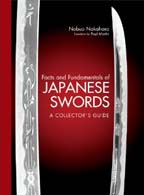
Having received a notification from www.thejapanesesword.com last week, I am now a proud owner of Nobuo Nakahara's 'Facts and Fundamentals of Japanese Swords. A Collector's Guide' (translated into English by Paul Martin). Actually, I have two copies now, already thinking of some kind of contest or raffle for Nihonto Club to give one away. I had a quick glance and couldn't stop myself reading few pages here and there. Now I'm looking forward to weekend to read it from the very start to the end. It's somehow different to other Nihontō books. Instead of typical indispensable but dry sequence of glossary terms, lists of schools and prominent smiths, it is shaped as an engaging narrative with Q&A sessions, bullet points, flashbacks and terms related to the context. It offers very practical, hands-on view to sword collecting and appreciation, and gives an impression of attending a high quality seminar with a master, rather than of reading a heavy-weight academic publication. It was especially appealing as I was always wondering if it will ever be a book or online resource which (while being professional and scholarly) provides a view at Nihontō tailored to a beginner's mind, temporarily stepping away from highly specialized mindset of a connoisseur. Now we have one. I think it's very important. A person who just started having an interest in authentic Japanese swords will hardly comprehend descriptions of hamon and hada of Kunimitsu, but will rather have simple questions like 'how to tell if the sword is good' and 'how old is it' and other practicalities. This is what this book seems to be about. Needless to say that the quality of publication and imagework is top-notch, being typical to Kodansha Intl. As seen in Questions & Answers, Nakahara-sensei offers a straight and refreshing view at the subject with less emphasis on the lore, but focusing more on the sword itself. Some of his opinions may be seen as unorthodox and strong, but as mentioned by Paul Martin in the introduction there are many different theories and viewpoints in Japan, and all of them should be considered in order to get a broad understanding of Japanese swords. It must be said, I would really really like to have this book available at the time when I started collecting and studying Nihontō. It wouldn't be a surprise if in a few years this book will become an absolute must-have for any collector (beginner and experienced). |
|||
As announced in NBTHK mailing list a new book by Markus Sesko is out (124 pages, published in June 2010). Author himself describes the book as: My aim with this publication is to make the major genealogies of Japanese swordsmiths and their schools from the kotō to the shintō and shinshintō periods easily accessible to the Western reader, namely in that they are complete and have been revised for the first time, in a single book. The publication begins with a brief introduction to the history of Japanese sword literature. |
|||
Forgive me if this has gone out already. I was asked by the NBSK to openly invite entries to this years competition for soft metals from non Japanese craftsmen regardless of school or lineage etc. It is 5000 JPY per entry the deadline is soon (maybe April 23), but if you have a tsuba, habaki or something that you made this year with your signature. Do not send swords! For one, they will not make the deadline, and two its probably not worth the hassle of trying to get a sword by an unlicensed smith in. See the NBSK site for details. I will post the application form soon. Best |
|||
As some of you may have noticed, there have already been some changes in the Swordsmith Index in recent weeks. This announcement provides details on the ongoing and planned updates for the Index. Macrons for long vowelsWhen the first version of the Index was released nearly 3 years ago, a decision was made to give the ability to search and maintain data the highest priority. In order to facilitate that, all the names and terms were transformed to plain ASCII format (given the overall state of the internet technology at the time). There was some research done recently by Google which shows that Unicode is now widely adapted and supported across the Internet. This gave me reassurance that it's time to revise this decision. Since we migrated to a new platform 6 months ago, it is technologically feasible now to take another step forward and review the way Japanese names and terms are presented in Swordsmith Index and throughout the site. The proposed changes are also based on feedback from visitors and members of Nihonto Club. Most importantly names of smiths, schools, provinces, eras as well as signatures will now be presented using macrons (ō and ū) for long o and u. Submission guidelines for Japan-related articles in Wikipedia are worth to be adapted: Manual of Style (Japan-related articles). This change won't affect searching as both internal search and Google search can process macrons correctly (e.g. if we search for 'Bishu Osafune' it will find both 'Bishu Osafune' and 'Bishū Osafune'). This should make it easier to reconcile Rōmaji with Kanji, and also help non-Japanese readers with pronunciation. As this is (mostly) manual process, it will take a while to migrate the whole site with tens of thousands records into the new format. Archaic pronunciationsRōmaji for iye and suye (家, 末 and alternatives) will be replaced by modern forms ie and sue. E.g. Masaiye and Iyetsugu will be displayed and Masaie and Ietsugu. |
|||
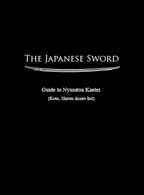
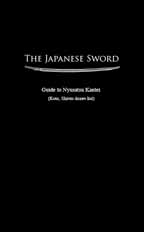
We are about a week away from the release of our pocket guide to nyusatsu kantei. If you are interested in pre-ordering a copy, please order from the contact page at http://www.thejapanesesword.com. It is W 4.25" x H 6.87". 50 pages. $12 +pp. It comes in a handy size (unlike most sword books) and is beneficial to sword enthusiasts of all levels. It has basic information for beginners, blade shape charts, explanation of the rules of kantei and most importantly a Koto, Shinto dozen list for easy navigation when practicing nyusatsu kantei. Sorry for the bandwidth, but I felt that the western sword world needed this amazingly important tool in order to be able to practice and build their confidence in nyusatsu kantei. |
|||
Ability to send private message (PMs) to other members is available again. Your mailbox is available in the menu on the left hand side (Messages). If you would like to contact somebody else, you may either use Write new message option and pick a recipient, or use the link Send this user a message on the member's account page. |
|||
Swordsmith Index now allows filtering by Province and Era. Note: when filtering by Era, only traditional Nengō are available. It's currently not possible to filter by historical periods (e.g. Nanbokucho) or sword periods (Koto, Shinto etc). This is due to the fact that filtering works off the specified Start Era field in the smith record. Therefore filtering by Koto period will only show records with Start Era = Koto, and not any Koto smiths as one would expect. |
|||
Hi All, |
|||
Dear Members and Visitors, As promised, NC software has been upgraded over weekend. This is an essential step towards further development of the NC platform. The following features are available immediately:
|
|||
A ban on Samurai swords comes into effect from today. Those caught with the weapons could face up to seven years in prison. In a bid to cater for collectors, those made before 1954 or at another time by traditional hand-made methods will be exempt.
Talks about potential sword ban started in December 2007 after another high profile attack involving a 'samurai sword'. It is known that Department of Justice had been in contact with local martial arts organisations (Iaido Association of Ireland is particular) is order to avoid unnecessary restrictions for martial arts practitioneers and authentic sword collectors. In the light of recent global trends to regulate possession and transportation of 'samurai' swords (which sometimes comes in quite narrow-minded forms) the new Irish legislation appears to be reasonable, especially taking into account the (more than modest) size of the local sword scene. Mirroring the UK sword ban which was introduced in April 2008 as one of the questionable measures to fight 'knife crime', authentic hand-made Japanese swords (Nihonto) are exempt (however I couldn't yet find any reference to whether sports equipment such as iaito and shinken is to be banned or not). The real concern is the practical side of the legislation and the way it's going to be implemented. There's been numerous occasions in UK since introduction of the sword ban when law-abiding collectors had trouble importing antique swords. It's perfectly understandable due to the fact that in order for Customs to make sure that it's legal to import a sword, some sort of cerfificate required proving its age and provenance. And the most common cert of this kind (if any) is the NBTHK paper hand-written in Japanese. No wonder Customs officers, sorting office workers and law enforcement authorities would not be able to take it as a supportive documentation without difficult (and costly) translation.And this is the neigbouring UK which is much more accustomed to importing/exporting Japanese collectible weapons than Irish. How many Customs officers and An Post employees were instructed about differences between replica and authentic Japanese swords or even have seen ones? Will they be collector-friendly or take an eBay approach and stop any import of 'illegal samurai-like swords' unless (with immense trouble) proven otherwise? If temporarily or permanently seized, will real Nihonto be given a proper care? There is no doubt that curculation of cheap and dangerous replica had to be stopped, even with the level or crime involving samurai swords being ridiculously low in comparison to the usage of widely available home utensils.But will the fair treatment of martial arts practitioneers and sword collectors be guaranteed? Time will tell. |
|||


Recent comments
15 weeks 6 days ago
20 weeks 6 days ago
32 weeks 1 day ago
1 year 14 weeks ago
1 year 52 weeks ago
3 years 16 weeks ago
3 years 19 weeks ago
4 years 14 weeks ago
5 years 12 weeks ago
6 years 25 weeks ago