|
|
|
|
|
|
Submitted by Kataner on Thu, 2026-09-17 17:21
|
Description
Period: starts Bunmei (1469-1487) (Active Period 1478-1528)
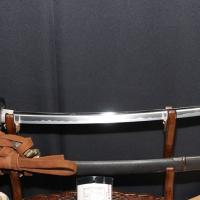
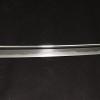
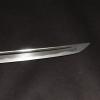
Nagasa: 63.7cm
Sori: 2cm
Tsukurikomi: shinogi-zukuri
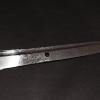
Mei: 備州長船宗光 (Bishu Osafune Munemitsu) / 長享二年八月日 (Chōkyō 2. Jahr, 1488)
Paper: JTK Brown Paper
Bizen Osafune Munemitsu (Muromachi): Sakyōnoshin Munemitsu (左京進宗光) was a swordsmith active from 1478 to 1528. He was the brother of Ukyo no Suke Katsumitsu (右京亮勝光), with whom he collaborated extensively. Both are considered important representatives of the Sue Bizen tradition.
In a treatise, Markus Sesko notes that Bizen smiths such as Katsumitsu (勝光) and Munemitsu (宗光) accompanied the army of Akamatsu Masanori (赤松政則, 1455–1496) to his encampment at Magari (鈎) in Ōmi Province during the conflict in which Akamatsu fought alongside the Ashikaga (足利) forces against the local Rokkaku clan (六角). He also mentions that this campaign was abandoned in the third year of Chōkyō (1489). Given these details, it is reasonable to assume that the katana presented here was crafted during that campaign.
Regarding the JTK paper: The organization's name is Juho-Token-Kenkyukai (銃砲刀剣研究会). After the NBTHK’s regional branches faced severe restrictions regarding their independent operations and appraisal activities, independent study and appraisal groups formed in several regions to meet the renewed interest in nihontō. The JTK group emerged in the Kyoto area and issues its own appraisal certificates (origami). During their appraisal sessions (shinsa), "blue papers" are issued monthly for authentic art swords, while a "brown paper" is awarded once a year for particularly exquisite swords. Currently, the appraisal sessions are led by Masayuki Tsujimoto (辻本真幸), the deputy head of the NBTHK branche in Kyoto. He also signed the origami for the nihontō presented here.
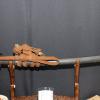
The accompanying koshirae displays dragonflies crests of a daimyō.
|
|
|
|
|
|
|